



Dutch Elm Disease Management in Saskatoon protects the city's mature elm canopy from one of the most destructive tree pathogens in North America. American elm trees lining Saskatoon's boulevards and residential properties are highly susceptible to this vascular wilt, which can kill a tree within one to three seasons. Bridge City Tree Trimming provides inspection, sanitation pruning, and removal planning for infected or at-risk elms across the Saskatoon area. Early detection and decisive action save trees and prevent the disease from spreading to neighbouring properties. Our ISA Certified Arborists diagnose wilt symptoms, assess risk, and execute the interventions that keep your elm healthy or safely remove it before it becomes a hazard. Contact us for a free estimate.
Why Dutch Elm Disease is a Threat in Saskatoon
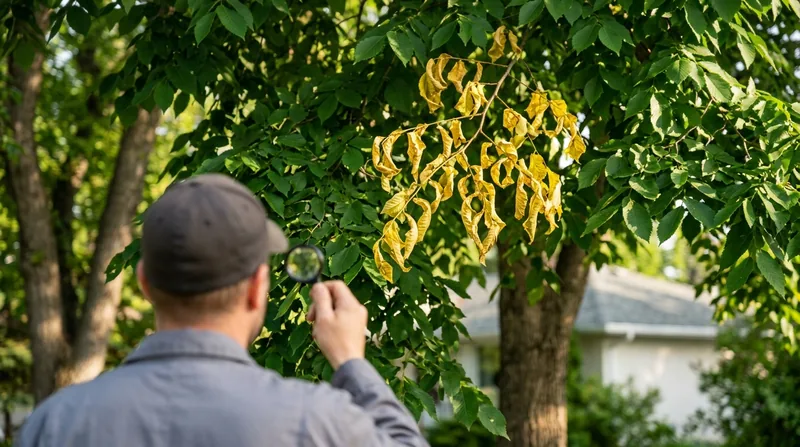
Dutch Elm Disease (DED) is a fungal vascular disease spread by elm bark beetles and through root grafts between trees. In Saskatoon, the disease has become endemic in the urban forest and threatens the survival of mature American elms that define the character of older neighbourhoods and tree-lined streets. Once a tree shows wilt symptoms (flagging branches, yellowing foliage, canker formation), the pathogen is already systemic, and intervention must be swift. The City of Saskatoon recognizes DED as a significant public health concern, and provincial regulations govern the removal and disposal of infected material.
- Inspect your elm for wilting branches, yellowing leaves, or dark streaking under the bark.
- Remove infected branches immediately to slow disease progression and reduce beetle habitat.
- Prune healthy elms to reduce beetle attraction and improve air circulation.
- Plan removal of heavily infected trees before they become unstable or drop large limbs.
- Dispose of all elm wood and debris according to provincial guidelines to prevent beetle emergence.
Early action is the difference between saving a tree and losing it. Waiting allows the fungus to girdle the vascular system, making recovery impossible.
Local fact: Saskatoon's mature elm population, particularly in Riversdale and Pleasant Hill, represents decades of urban forestry investment. A single infected tree can threaten dozens of neighbours through root contact and beetle dispersal. Early removal or aggressive sanitation pruning can save an entire block.
How We Manage Dutch Elm Disease in the Saskatoon Area
Our approach combines diagnostic expertise, surgical pruning, and removal planning tailored to each tree's condition and your property's layout. We begin with a thorough inspection to confirm DED, assess the extent of infection, and determine whether the tree can be saved or must be removed. For trees showing early symptoms, we perform sanitation pruning to remove all infected wood and reduce beetle habitat. For trees that cannot recover, we plan safe removal and ensure all material is handled according to provincial waste guidelines.
- Examine the tree for wilt symptoms, cankers, and beetle entry holes using close-range visual assessment.
- Take wood samples if needed to confirm the presence of the DED fungus.
- Prune all infected and symptomatic branches back to healthy wood, disinfecting tools between cuts.
- Remove the entire tree if more than 50% of the crown is affected or if the trunk is girdled.
- Chip all pruned material on-site or haul it to an approved facility; never leave elm wood exposed.
- Provide documentation for the City of Saskatoon if a permit is required for removal.
This methodical process prevents disease spread, protects your neighbours' trees, and ensures compliance with local and provincial regulations. Our crews work efficiently to minimize disruption to your property and neighbourhood.
Example: A 15-metre American elm in Martensville showed flagging in the upper crown and a canker on the main trunk. Our arborist diagnosed advanced DED affecting approximately 60% of the vascular tissue. Safe removal took one day, with all wood chipped and removed. The owner obtained a removal permit from the municipality and replanted the site with a disease-resistant species.
Methods and Techniques for Disease Management
| Method | Description | Best for |
|---|---|---|
| Sanitation Pruning | Removal of all wilted, discoloured, or cankered branches back to healthy wood. Tools are disinfected between cuts to prevent spread. | Trees with less than 30% crown infection and good structural health. |
| Crown Reduction | Strategic removal of outer branches to reduce beetle attraction and improve air circulation, slowing disease progression. | Moderate infections where the trunk remains healthy and the tree has recovery potential. |
| Complete Removal | Felling and chipping of the entire tree when infection is systemic or the tree poses a safety hazard. | Trees with more than 50% crown involvement, girdled trunks, or proximity to structures. |
| Root Graft Disruption | Trenching or chemical treatment to sever root connections between infected and healthy elms in close proximity. | Protecting healthy trees adjacent to confirmed DED cases. |
Each method is chosen based on the tree's age, health status, location, and your long-term goals for the property. Our arborists explain the options clearly and recommend the approach that balances tree preservation with disease control.
Regulatory and Safety Requirements
The City of Saskatoon may require a permit for private tree removal, particularly for mature elms on properties within city limits. An arborist report documenting the disease and recommending removal strengthens your permit application and demonstrates due diligence. We prepare this documentation as part of our service, saving you time and uncertainty. Across the Saskatoon area, municipal rules vary, and we ensure compliance with local bylaws in Martensville, Dalmeny, Langham, and other communities we serve.
All elm wood removed from your property must be chipped on-site or hauled to an approved disposal facility. We never leave elm debris exposed, as it can harbour bark beetles and spread the disease. If your property has a private electrical service entrance, we maintain safe approach distances and never work near overhead power lines. Any elm touching SaskPower's public distribution network is referred directly to SaskPower for clearance.
Timing and Seasonal Considerations
Dutch Elm Disease management follows a seasonal rhythm tied to tree dormancy and beetle activity. Sanitation pruning and structural pruning are best done in late fall to late winter, when the tree is dormant and beetle activity is minimal. This timing also reduces the risk of fresh pruning wounds attracting beetles in spring. If you notice symptoms during the growing season, we can perform emergency removal or targeted pruning to halt disease spread, but major pruning is deferred until dormancy when healing is optimized.
Elm bark beetles emerge in late spring and early summer, making this the critical window for completing sanitation work on at-risk trees. If your elm shows signs of DED during the growing season, contact us immediately for assessment. Waiting until autumn can allow the disease to advance beyond recovery, turning a save into a removal.
For tree disease diagnosis and ongoing monitoring, we recommend annual inspection of elms on your property and your neighbours' trees to catch new infections early.
Why Choose Bridge City Tree Trimming for Elm Disease Management
Since 2015, we have managed Dutch Elm Disease across Saskatoon and the surrounding municipalities with ISA Certified Arborists who understand the biology of the pathogen and the structural demands of elm removal. We combine diagnostic precision, surgical execution, and regulatory expertise to protect your tree, your property, and your neighbours. Every job is fully insured, and we document our work for municipal permits and insurance claims. Call (639) 638-8719 for a free estimate or visit our service areas page to confirm coverage in your neighbourhood.
Prices Dutch Elm Disease Management in Saskatoon — Indicative pricing
| Service | Price | Details |
|---|---|---|
| Inspection and diagnosis | From $200 | Arborist assessment, disease confirmation, and treatment recommendation |
| Sanitation pruning (small to medium crown) | From $400 | Removal of infected branches, tool disinfection, and on-site chipping included |
| Sanitation pruning (large crown, 15+ metres) | From $800 | Aerial work, extended pruning, multiple disease foci, on-site chipping |
| Complete elm removal (small to medium, 10–15 metres) | From $1,200 | Felling, chipping, stump grinding, debris removal, permit documentation |
| Complete elm removal (large, 15+ metres) | From $2,000 | Rigging, aerial dismantling, chipping, stump grinding, full site cleanup |
| Free estimate | No charge | On-site inspection, diagnosis, and written recommendation within 24 hours |
Indicative prices; free, personalized estimate within 24h at (639) 638-8719.